COUNCIL
Fresh basil is one of the most used herbs in Mediterranean cuisine, but also one of the most delicate to store. Its leaves, rich in fragrance and aromatic oils, can wilt quickly, turn black, or become soft when exposed to low temperatures, excessive humidity, or frequent handling.
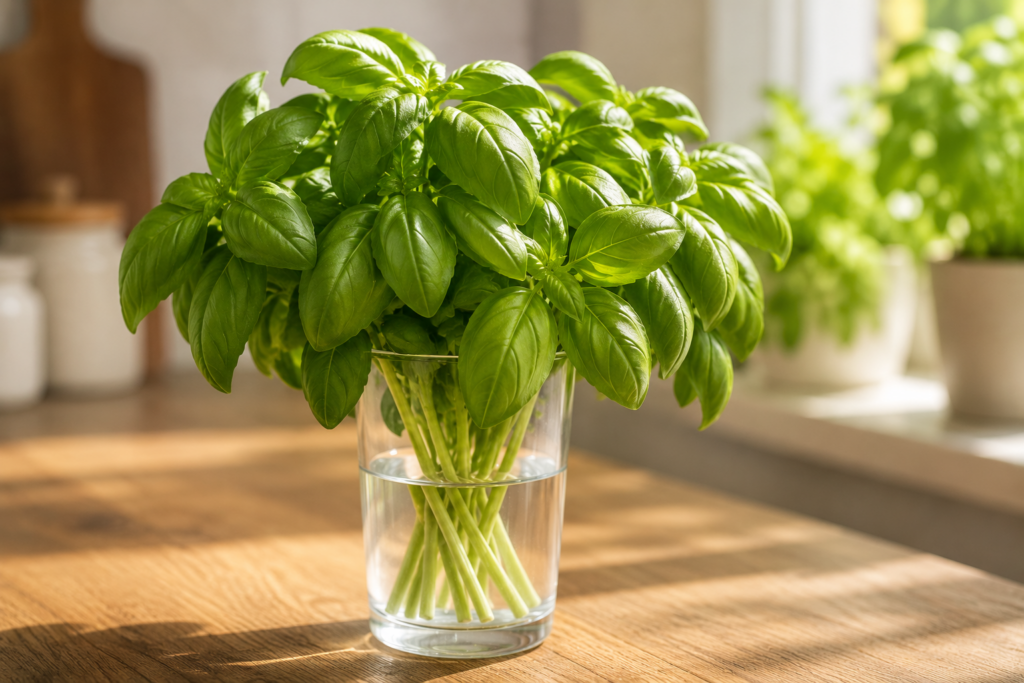
To keep basil fresh for as long as possible, simply placing it in the refrigerator's crisper drawer isn't always convenient. When basil is purchased in bunches with the stems still intact, one of the most practical ways is to treat it almost like a bouquet of flowers, placing it in a little water and protecting it from heat and direct light.
Preserve basil like a bouquet of flowers
If the basil still has fairly long stems, you must first remove any damaged parts and slightly shorten the base of the stems with a clean cut.
The bunch can then be placed in a glass or small vase containing a few centimeters of water. Only the stems should be immersed: the leaves should not come into contact with the water, as prolonged humidity would encourage the appearance of dark spots and soft spots.
The container should be placed in a cool area of the kitchen, away from the stove, oven, and direct sunlight.
Under favorable conditions, this method allows the basil to maintain its turgid and fragrant leaves for longer.
Change the water regularly
The water used to preserve the stems should not remain stagnant for many days. It's advisable to check it daily and replace it when it appears cloudy or contains plant debris.
During the change, you can quickly rinse the glass and, if necessary, shorten the ends of the stems by a few millimetres again.
It is also important to immediately remove any leaves that have fallen into the water, as they quickly begin to deteriorate.
The liquid level should be enough to cover the bottom of the stems, without reaching the leaves.
Is the refrigerator or room temperature better?
Basil is particularly sensitive to cold. Very low temperatures can damage the leaf cells, causing the characteristic black spots to appear.
For this reason, the refrigerator isn't always the best solution for a fresh bunch. Common basil can be stored well at room temperature for a few days, especially when the kitchen isn't excessively warm.
During the summer, however, very high indoor temperatures can accelerate wilting. In these conditions, it may be necessary to choose a cooler area or, with some caution, use the refrigerator.
If refrigerated, it is best to protect it inside a container or a loosely fitting bag, avoiding the coldest areas of the appliance.
Should I cover the basil or not?
A light bag placed over the bunch, loosely wrapped around the leaves, can help limit moisture loss.
However, the bag should not create a completely closed, condensation-rich environment. If a lot of water drops appear inside, increased ventilation is necessary.
The goal is to protect the basil from excessively dry air without leaving the leaves constantly wet.
When the room temperature is moderate, the bunch can also be stored uncovered, simply checking that it does not start to wilt.
It is better not to wash it before storing it
If the basil is not to be used immediately, it is generally preferable not to wash it beforehand.
Water trapped between the leaves increases surface humidity and can promote faster deterioration. It's therefore best to remove only the leaves you need and wash them shortly before use.
Once the basil has been washed, it must be dried thoroughly. The leaves can be spread out on paper towels or a clean cloth and gently patted dry, without rubbing.
A salad spinner can be used with great caution, avoiding overly vigorous movements that could damage the leaves.
Why does basil turn black?
Blackening can be caused by several factors. Excessive cold is one of the most common causes, but crushing, cuts, oxidation, and prolonged exposure to water can also contribute.
Basil leaves are very delicate. When they are bent or compressed, the cells break and quickly begin to change color.
For this reason, it is not advisable to place heavy foods on top of the basil or to compress the bunch inside a container that is too small.
Blackened leaves should be discarded when they also show soft texture, abnormal odor, or other signs of deterioration.
How to store basil once it's been removed from the stems
If you only have leaves, the glass of water method cannot be used.
Dry leaves can be placed in a container lined with paper towels. The paper helps absorb any excess moisture, while the container protects the leaves from being crushed.
They should be checked daily and discarded if they begin to deteriorate. The paper should be replaced if it becomes very damp.
In this situation, the refrigerator is generally the most practical solution, although the shelf life will be shorter than that of a bunch with healthy stems.
Freezing basil
When you have a lot of basil and can't consume it quickly, freezing it allows you to preserve much of its aroma.
The leaves can be washed, dried thoroughly, and frozen in small containers. However, after thawing, they will lose their original texture and are not suitable for garnishing salads or cold dishes.
However, they are excellent for sauces, soups and cooked preparations.
An alternative is to roughly chop the basil and freeze it in small molds with extra virgin olive oil. The resulting portions can be added directly to dishes while they're cooking.
And the pesto?
Making pesto from basil is another way to quickly use up large quantities of leaves, but the sauce requires different storage than fresh basil.
Homemade pesto should be refrigerated and consumed quickly. For longer shelf life, it can be frozen in small portions.
During preparation, it is useful to work the ingredients without overheating them excessively, because heat and oxidation can cause the basil to lose some of its bright green color.
A daily check avoids waste
Whichever method you choose, basil must be checked regularly. A single damaged, wet leaf can create a damp spot that can quickly compromise the surrounding plants.
It is therefore necessary to eliminate the damaged parts, change the water in the stems and check for the presence of condensation.
If the basil has mold, unpleasant odors, slimy parts, or extensive deterioration, it should not be used.
In conclusion
To keep basil fresh longer, it's best to keep the stems intact and place them in a glass with a little water, leaving the leaves completely dry and away from the liquid.
The bunch should be kept in a cool place, protected from sunlight and heat sources, changing the water regularly. The refrigerator can be used in very hot environments or when storing only leaves, but avoid excessively low temperatures and humidity.
Washing basil just before using it, handling it gently, and checking it daily helps preserve its color, aroma, and freshness longer, while also reducing waste in the kitchen.