DESCRIPTION
Ahornberger Würzig is the shortened name often used for Ahornberger Landbier Würzig, a bottom-fermented German beer rooted in the tradition of Upper Franconia. More than a spiced lager in the literal sense of the word, it's a Landbier with a malty, smooth, and moderately hoppy profile. The German word "würzig" can be translated as savory, aromatic, or spicy, but in this case it doesn't necessarily imply the addition of spices to the recipe.
Historical information about the beer indicates an alcohol content of approximately 4,8% ABV and a Vollbier structure, a German tax and trade name that encompasses numerous intermediate-strength beers. It is therefore closer to a regional lager than to a strong or particularly complex specialty.
A Landbier from Upper Franconia
The term Landbier doesn't identify a rigidly regulated style. It's used primarily to communicate a connection to local production and rural tradition. Depending on the brewery, a Landbier can be pale, amber, dark, filtered, or naturally cloudy.
Ahornberger Würzig appears to belong to the pale Landbier family, with characteristics similar to those of a malty lager or a slightly more rustic Helles. Some classifications refer to it as Helles, others as Kellerbier, or simply as Lager. The commercial designation Landbier Würzig therefore remains the most conservative and representative.
The reference to Bavaria is geographically correct, but it can be clarified: Ahornberg is located in Upper Franconia, in northern Bavaria, an area with a particularly rich brewing culture. Compared to typical Munich beers, many Franconian beers exhibit a more rustic character, a balance more oriented towards bread and cereals, and a slightly more pronounced presence of hops.
A complex production history
The brand was originally associated with the Ahornberger Landbrauerei in Ahornberg, in the municipality of Konradsreuth. After the historic brewery closed in the early 2010s, Ahornberger specialties were taken over by the Frankenwälder Brauhaus in Naila.
This producer also subsequently experienced financial difficulties and corporate changes. Current availability of Ahornberger Würzig is uneven, and it's difficult to confirm regular and continuous production. Some packages may still appear in commercial catalogs or collections dedicated to German beers, but this doesn't necessarily mean they were produced recently.
When you find a bottle, it's therefore useful to check the date, the name of the factory, and the information on the label. These elements allow you to distinguish an older production from a newer version made by a different producer.
Appearance and foam
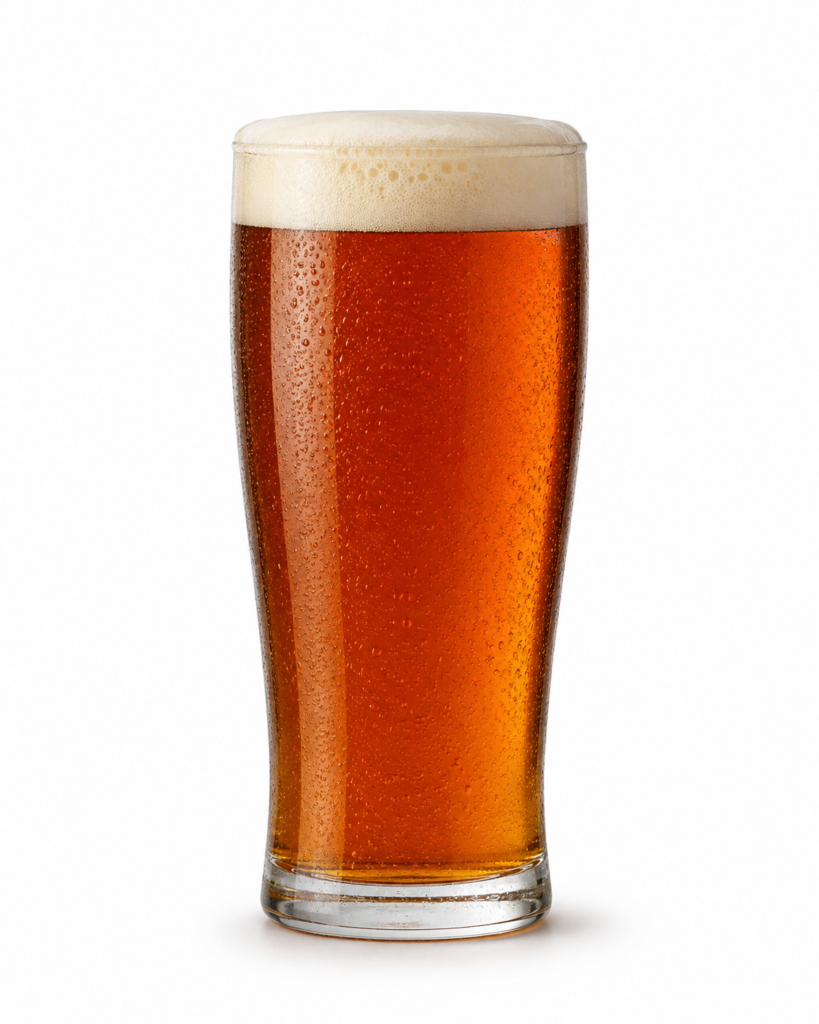
In the glass, Ahornberger Würzig generally presents a golden yellow color, sometimes with very light amber highlights. Historical descriptions primarily speak of a clear, filtered beer, so a noticeable haze shouldn't automatically be considered an original characteristic of the product.
The head is white and initially abundant, with a fine, creamy consistency. Its persistence can be medium and depends on the freshness of the bottle, the temperature, and the cleanliness of the glass. Traces of grease or detergent quickly reduce the stability of the crown.
The not particularly dark color is consistent with a pale malt base. The slight amber hues may suggest the use of more distinctive malts, but it's not appropriate to derive a precise recipe without referring to the specific packaging.
Perfume and aromatic characteristics
The aroma is predominantly malty. Notes of cereal, fresh bread, a light crust, biscuit, and a slight sweetness reminiscent of honey can be detected. This is a descriptor and does not prove that honey was actually used in production.
Hops add herbal, floral, and slightly earthy notes. The term "würzig" refers primarily to this combination of malt, grain, and hops, not the definite presence of pepper, coriander, or other spices. The aroma should remain clean and balanced, without intense fruity aromas produced by fermentation.
If the bottle is old or poorly stored, hints of cardboard, wet paper, or tired malt may appear. These notes aren't part of the beer's ideal profile, but are signs of oxidation and a loss of freshness.
Taste, body and finish
The entry on the palate is smooth, with a restrained malty sweetness and hints of bread and cereal. The body is medium-light, leaner than the initial description of a particularly enveloping beer suggests. The carbonation contributes to the smoothness and keeps the sip lively.
The hops emerge in the middle, with a moderate, clean bitterness. The finish leans dry, leaving a grassy, slightly bitter note. This isn't a beer built on extreme aromas: its strength lies in the balance between malty smoothness and hoppy freshness.
The "spicy" perception remains delicate and should be interpreted as an aromatic nuance. Don't expect the peppery intensity of a saison or the phenolic character of some top-fermented Belgian beers.
Service and pairings
Ahornberger Würzig can be served chilled, approximately between 7 and 9°C. Too low a temperature would flatten the malt and make the herbal notes less recognizable. A German stein, a Willibecher, or a simple, slightly flared lager glass are suitable.
At the table, it pairs well with sausages, roast pork, chicken, cutlets, baked potatoes, and rustic focaccia. It also pairs well with semi-hard cheeses, mild cured meats, and fried dishes, as the carbonation and dry finish help cleanse the palate.
Conservation and conclusion
The bottle should be stored upright, in a dark place, and away from temperature fluctuations. Since this beer is not intended for aging, it should be consumed as fresh as possible. If the bottle is dated, check the integrity of the closure and accept that the profile may differ from the original.
Ahornberger Würzig is therefore a pale, malty, and moderately hoppy Franconian Landbier, not a spiced beer. Its complex production history makes it particularly important to check the label and date of each bottle, while serving it not too cold enhances its simple, rustic, and balanced character.
The board

Brewer style

Alcoholic degrees

Service temperature

Recommended mug