DESCRIPTION
Grimbergen Cuvée de l'Ermitage is a top-fermented amber Belgian beer that is now discontinued. The most recent bottles were marketed as part of the Grimbergen range and generally had an alcohol content of 7,5%, but the beer's history predates its inclusion in the abbey brand. It was not originally brewed by the monks of Grimbergen, nor was it a celebratory edition produced at the monastery.
The initial description also needs to be correct in terms of flavor. The Cuvée de l'Ermitage had a soft, fruity malty base, but wasn't necessarily full-bodied or dominated by sweetness. Reviews of later versions describe a medium body, fairly lively carbonation, and a distinctly bitter finish.
A history before the Grimbergen brand
Cuvée de l'Ermitage was created in the 1950s by the Brasserie de l'Union in Jumet, in the Charleroi area. The name refers to the Ermitage de Cocars, near Dour, a place particularly beloved by brewer and engineer René Duquesnoy. Historical accounts place its launch in 1953, although some sources place it in 1954.
Brasserie de l'Union was acquired by the Maes group in 1978, and Cuvée de l'Ermitage subsequently became part of the Grimbergen range. This commercial transition might suggest that the beer was born directly from the abbey's tradition, but this is not the case. The reference to the hermitage was already part of the original Jumet product.
Grimbergen is an abbey beer, not a Trappist beer. Furthermore, in the specific case of Cuvée de l'Ermitage, the connection to the Grimbergen brand was acquired at a later stage. The word "cuvée" suggested a select or particularly careful production, but did not automatically indicate a blend of vintages, barrel maturation, or a monastic recipe.
Production ended around 2010, and the product does not appear in the current Grimbergen range. Any bottles still available should therefore be considered historic or collectible.
Versions and alcohol content
The latest Grimbergen Cuvée de l'Ermitage bottles were typically associated with an alcohol content of 7,5%. However, older documents and descriptions report different values, ranging between 7% and 8,5%, likely because the recipe and commercial positioning changed over time.
Some historic versions were also marketed as seasonal or Christmas beers. However, it's not correct to apply these characteristics to every bottle labeled Grimbergen Cuvée de l'Ermitage. The label, format, year, and alcohol content are essential to determining which brew you're dealing with.
The original product descriptions mention the use of different malts and hops and a prolonged maturation. Later packaging references barley and wheat. Since the information is not uniform, it is best not to attribute a single recipe to all versions.
Appearance and foam
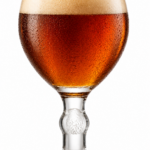
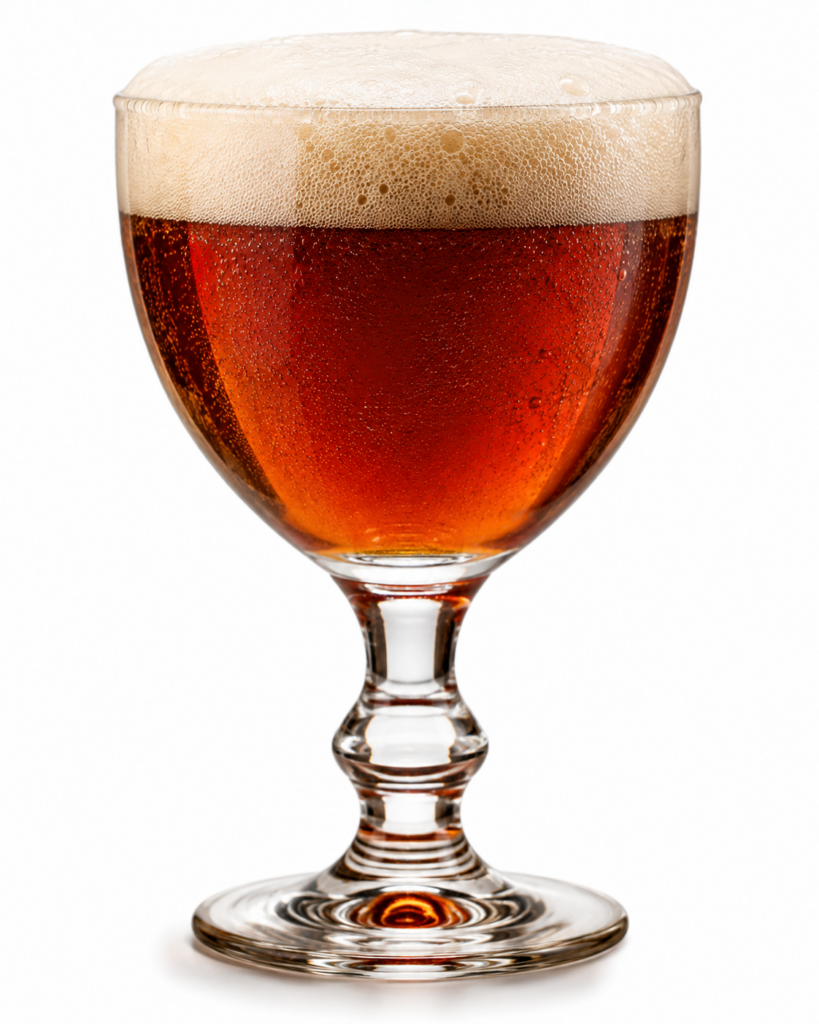
In the glass, the beer was a deep amber, with copper, reddish, or light brown hues. Some descriptions use the French term "rousse," which indicates a tawny or reddish hue, not a black or deeply toasted beer.
The appearance was generally clear, although an older bottle may show cloudiness or sediment developed during storage. The head tended towards cream or ivory, with a creamy consistency and variable persistence.
The condition of the bottle has a significant impact on the outcome. A bottle stored for over a decade may have lost carbonation, while a tightly sealed cork may have retained some liveliness. Age alone doesn't predict the quality of the head or flavor.
Aroma of malt, fruit and fermentation
The aromatic profile of the most documented versions included caramel, toffee, bread crust, and malt, followed by ripe or dried fruit. Raisins, plums, caramelized apple, and dark fruits are recurring descriptors, accompanied by the fruity and spicy notes of top-fermentation.
Hints of honey, vanilla, wood, herbs, or ripe citrus could also emerge. These hints don't prove that honey, vanilla, fruit, or spices were actually added to the recipe. Many sensations derive from the malts, yeast, hops, and the beer's evolution.
In a very old bottle, oxidative aromas reminiscent of dried fruit, sherry, paper, or soy sauce may appear. When light, they can add complexity; when dominant, they signal an unpleasant evolution.
Taste, body and finish
On the palate, the Cuvée de l'Ermitage offered a malty entry, with caramel, bread, and ripe fruit. The sweetness was noticeable, but it was countered by the hop bitterness, particularly evident on the finish.
The body was generally medium, not necessarily as full as a robust dubbel or a high-alcohol Belgian Dark Strong Ale. The carbonation helped make the sip more dynamic, while the warmth of the alcohol gradually became recognizable.
The finish could be dry, bitter, and persistent, with herbaceous, spicy, or slightly earthy nuances. Some tastings also report a slight acidity, which may depend on the recipe, the fermentation, or the age of the bottle. It's therefore incorrect to describe it simply as sweet, velvety, and harmonious: it also possessed a bitter and sometimes more rustic component.
Temperature, glass and service
For a bottle that's still in good condition, a temperature between 8 and 12°C is recommended. Serving it too cold will mask the malt, fruit, and fermentation; serving it too hot will further highlight the alcohol and oxidation.
The most suitable glass is a tulip glass or a Belgian beer glass. The bottle should be left upright for a few days before opening, especially if there's sediment. When pouring, it's best to pour slowly, avoiding pouring the last part of the beer straight away.
Before tasting a historic bottle, it's important to check the cap, liquid level, and any leaks or unusual odors. Collectible value doesn't guarantee the contents are still suitable for tasting.
Food pairings
When chilled, Grimbergen Cuvée de l'Ermitage paired well with roast pork, stews, sausages, duck, and meats with slightly sweet and sour sauces. Malt and caramel complemented the seared surfaces, while the bitter finish lightened richer dishes.
Semi-mature or mature cheeses were suitable, including some washed-rind products. Mushrooms, caramelized onions, savory pies, and dishes with dried fruit could also enhance their character.
At the end of a meal, try it with plum tarts, walnut desserts, or moderately sweetened dark chocolate. An older bottle, however, should be tasted first without any pairings, to assess its condition.
Conservation and conclusion
A surviving bottle should be stored upright, in the dark, at a cool, stable temperature. Since production ceased many years ago, no new bottles exist: any remaining bottles will have developed a different profile than the original.
Grimbergen Cuvée de l'Ermitage is a historic amber ale born in Jumet and only later added to the Grimbergen range. The alcohol content, recipe, and character can vary depending on the vintage. Inspecting each bottle is essential to reconstruct its identity and decide whether to keep it as a collector's item or open it with due caution.
The board

Brewer style

Alcoholic degrees

Service temperature

Recommended mug