DESCRIPTION
Mitchell's Old 90 is not a Scottish-brewed beer, nor is it a product of the historic Mitchell's brewery in Lancaster. Available information links it to Mitchell's Brewery in Knysna, in South Africa's Western Cape, the same brewery that produces Raven Stout, Bosun's Bitter, and Forester's Lager.
The beer is best known as Mitchell's 90 Shilling Ale, while the Old 90 or Old 90/- form appears in some older names and tasting notes. It is a South African ale inspired by Scottish tradition, characterized by an amber color, a rounded malty base, and light spicy nuances. Its current availability is unclear and may depend on the market or the point of sale.
A Scottish Ale born in South Africa
Mitchell's Brewery was founded in Knysna in 1983 by Lex Mitchell, at a still early stage in the South African craft beer movement. The first batches were inspired by British and European styles, reinterpreted for the local market.
The 90 Shilling Ale fit this mold. The Scottish reference concerned the recipe's profile, not its place of production. Calling it an authentic Scottish beer would therefore be inaccurate: it's more accurate to describe it as a South African ale with Scottish inspiration.
The association with Lancaster also likely stems from the presence of a historic Mitchell's brewery in the British landscape. However, there is insufficient evidence to attribute Mitchell's Old 90 to that English brewery.
What does “90 Shilling” mean?
The term "shilling" derives from an ancient Scottish commercial classification system. Originally, numbers like 60, 70, 80, or 90 indicated the price charged for a cask of beer and tended to indirectly reflect its strength and richness. Over time, these designations were used less strictly to suggest different levels of strength.
The number 90 therefore does not correspond to the alcohol percentage, bitterness, or an exact quantity of malt. In modern communication, it can simply indicate a richer Scottish Ale than lighter versions, without necessarily following a precise historical classification.
The labels for Mitchell's 90 Shilling Ale generally list an ABV of around 5-5,2%. This is a moderate level, far from that of many particularly strong or Wee Heavy Scotch Ales. However, it's a good idea to check the packaging, as the information and recipe may have changed over time.
Appearance and foam
In the glass, Mitchell's Old 90 can appear a deep amber, with copper, light mahogany, or reddish highlights. It shouldn't be completely dark or impenetrable: the warm hue comes primarily from the more colorful malts.
The head can range from ivory white to light beige, with a creamy consistency and medium persistence. The result depends on the carbonation, the serving method, and the cleanliness of the glass. Grease or detergent residue can quickly reduce the head's retention.
To pour correctly, it's best to tilt the glass during the first few pours and gradually straighten it. This method preserves the beer's liveliness and achieves a well-proportioned head.
Aromas of malt, caramel and spices
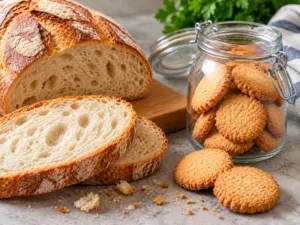
The aromatic profile is malty. Bread crust, biscuit, caramel, and toffee can be detected, along with possible hints of dried fruit. In some cases, plums, raisins, or baked apples may also emerge.
Spicy notes attributed to beer may recall cinnamon, herbs, or mild pepper. However, it's not correct to automatically assume these spices were added to the recipe. Similar sensations can arise from yeast, malts, hops, and fermentation.
Caramel, biscuit, and dried fruit are also primarily sensory descriptors. They indicate what the aroma recalls, not necessarily distinct ingredients present in the beer.
Taste, body and finish
On the palate, the entry is soft and malty, with flavors of bread, caramel, and toasted grain. The body can be perceived as medium and rounded, but not necessarily robust as the initial description suggests. The ABV of around 5% and the convivial character suggest a structured yet still smooth beer.
The malty sweetness is balanced by a moderate bitterness. The hops shouldn't dominate, but they help prevent an overly sugary finish. Carbonation, generally low to medium, complements the sip without making it pungent.
The finish can be malty, slightly dry, and spicy, with a lingering note of caramel, dark bread, and fruit. The warm sensation should remain moderate: this isn't an extremely strong beer, although the smoothness may make the alcohol less noticeable.
Difference between Scottish Ale and Scotch Ale
The terms Scottish Ale and Scotch Ale are often used interchangeably, but can indicate different strengths. Scottish Ale is a broad category that includes malty beers of moderate strength. Scotch Ale, on the other hand, is frequently associated with more robust, sweet, and alcoholic versions, sometimes called Wee Heavy.
Mitchell's Old 90 seems to be closer to a medium-strength malty Scottish Ale than a true Wee Heavy. The term "strong ale" is therefore inaccurate if it suggests a very alcoholic or particularly heavy beer.
Recommended temperature and glass
A serving temperature between 8 and 10°C (46 and 50°F) allows you to appreciate the malt without overemphasizing the sweetness. Serving it chilled would make it harder to perceive the caramel, bread, and spices; serving it too high could make it taste heavy.
A nonic pint glass, a tulip glass, or an ale glass are suitable. The vessel should provide room for the head and be wide enough to capture the aromas.
Food pairings
The malty component pairs well with roasted meats, burgers, sausages, and grilled pork. In South Africa, it can be served with boerewors, braai-cooked meat, and not-overly-spicy bobotie.
It's also suitable for meat pies, stews, mushrooms, caramelized onions, and roasted vegetables. Cheeses include cheddar, aged gouda, and moderately flavorful smoked products.
Low-sugar desserts, such as walnut cakes, spiced cookies, or apple and caramel desserts, work best with desserts. Too much sugar could make the beer thinner and more bitter by contrast.
Conservation and conclusion
The package should be stored upright, away from light and temperature changes. Since it's not a very alcoholic beer, it shouldn't automatically be considered suitable for long aging.
Mitchell's Old 90 is therefore a South African ale inspired by Scottish tradition, not a beer originating from Scotland or Lancaster. Its profile combines malt, caramel, bread, and delicate spiciness in a medium-bodied, convivial beer. The name, strength, and production status should be checked on the available packaging.
The board

Brewer style

Alcoholic degrees

Service temperature

Recommended mug