DESCRIPTION
The name Schneider Weisse identifies an entire family of Bavarian wheat beers, not just one. The description of an amber, hazy weissbier characterized by notes of banana, clove, bread, and caramel is particularly evocative of Schneider Weisse Original, now called TAP7 Original. It is the brand's historic beer and is brewed following the recipe developed in 1872 by Georg I Schneider.
TAP7 Original is a top-fermented, unfiltered, unpasteurized amber hefeweissbier with secondary fermentation in the bottle. It has an alcohol content of 5,4% ABV and a moderate bitterness, declared at 14 IBUs. Its character comes from the combination of wheat malt, barley malt, yeast, and German hops, without the need for added banana, cloves, or caramel: these hints are part of the sensory profile developed during fermentation and production.
The Birth of Schneider Weisse
The brewery's history began in Munich in 1872. At that time, bottom-fermented beers were conquering the market, and even the Bavarian court's production of wheat beer was in danger of being abandoned. Georg I Schneider, convinced that wheat beers still had a future, obtained the right to brew them, becoming the first non-noble citizen to receive such a privilege.
Together with his son Georg II, he founded the company G. Schneider & Sohn and began production at the Zum Maderbräu brewery. The first beer produced by the family marked the origin of today's TAP7. The term "TAP" is used by the brewery to distinguish the different references in the range and does not indicate alcohol content, strength, or quality.
After World War II, production moved to Kelheim, where the Schneider family used the historic Weisses Bräuhaus. The brewery thus continues to combine the family tradition born in Munich with a brewery that has been linked to Bavarian weissbier since the 17th century.
A darker than usual hefeweissbier
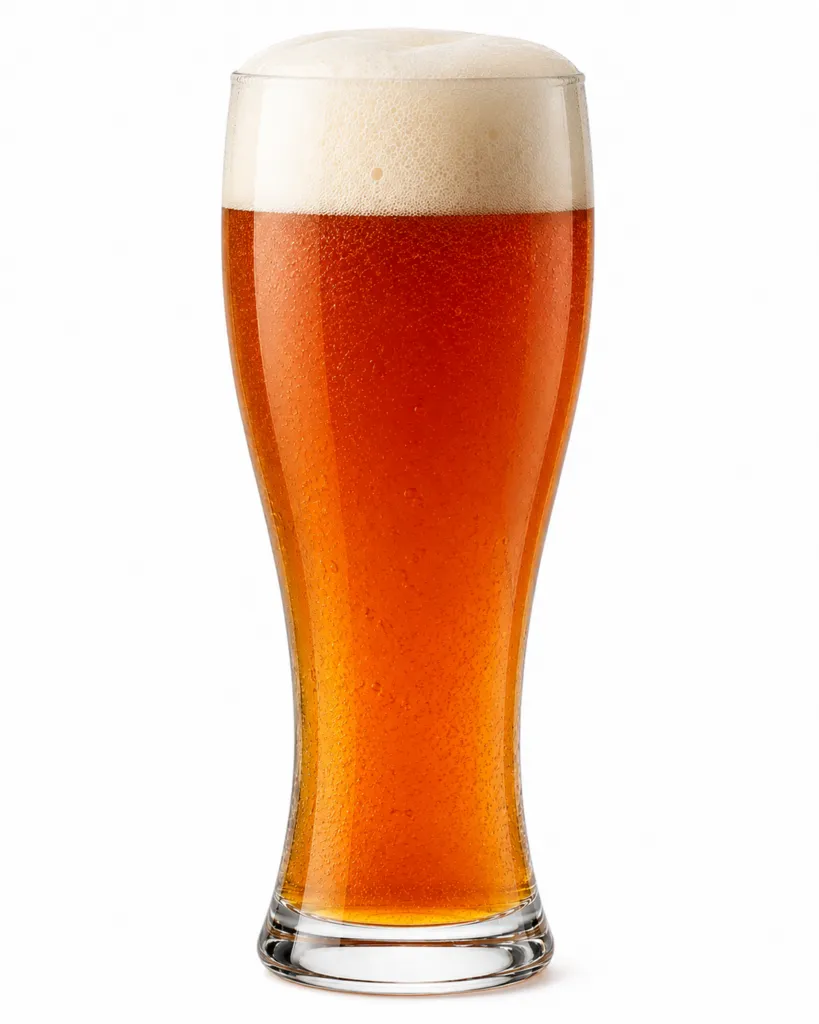
Many modern weissbiers are straw yellow or golden in color. Schneider Weisse Original, on the other hand, stands out for its deep amber color, with coppery highlights and a noticeable haze. This appearance is consistent with its malty profile and the historic recipe, developed at a time when Bavarian beers tended to be darker than today's pale hefeweizens.
Cloudiness isn't a flaw. TAP7 is unfiltered and contains yeast, wheat proteins, and other natural particles in suspension. The head is abundant, creamy, and persistent, aided by the wheat protein content and lively carbonation.
To properly evaluate its color, it's best to serve it in a tall, clear glass. When held up to the light, golden and coppery highlights can be seen, while the haze intensifies when the sediment at the bottom of the bottle is incorporated during pouring.
The role of yeast and cereals
Schneider Weisse Original is brewed with wheat malt and barley malt. The presence of wheat contributes to the smooth texture, head, and characteristic slightly acidic freshness. The barley malt completes the structure with aromas reminiscent of bread, crust, biscuit, and delicate caramel.
Top-fermenting yeast is responsible for much of the aromatic personality. Esters formed during fermentation can be reminiscent of ripe banana and other fruit, while phenolic compounds evoke cloves and spices. Therefore, these are not flavorings added to the recipe.
The producer uses open fermentation and a true refermentation in the bottle. The latter contributes to carbonation and leaves a natural sediment at the bottom. The beer is not pasteurized, a choice that preserves its fermentation character but requires careful storage.
Aroma, taste and consistency
On the nose, TAP7 Original generally offers notes of banana, clove, yeast, fresh bread, and malt. Hints of nutmeg, ripe fruit, caramel, and citrus may also appear, with varying intensity depending on the temperature, the freshness of the bottle, and the way the lees are poured.
The palate is smooth and lively. The malty component adds a moderate sweetness, while the carbonation lightens the body and keeps the drink dynamic. Bitterness is low and appears mainly on the finish, without overpowering the yeast and grains.
Compared to a pale hefeweizen, Schneider Weisse Original appears more structured, malty, and dark, but retains the style's typical effervescence. The finish alternates between bread, fruit, spice, and a slight bitterness, with enough persistence to enhance the complexity without making the sip heavy.
Correct temperature and pouring
The ideal serving temperature is around 8°C. A beer that's too cold will mask the fruity and spicy notes; if served too warm, however, it could taste sweeter and less balanced.
The traditional weissbier glass, tall and slightly flared, is the most suitable choice. Before pouring, it should be thoroughly cleaned and, if possible, rinsed with cold water. Tilt the glass and slowly pour in most of the beer. The bottle can then be gently swirled to collect any yeast remaining on the bottom, completing the pour with the glass held almost vertical.
Those seeking a cleaner profile can leave some of the sediment in the bottle. Incorporating it, however, results in greater cloudiness and a more pronounced presence of yeast notes.
Food pairings
Schneider Weisse Original pairs well with Bavarian cuisine, from white sausages with mild mustard to roast pork with potatoes. It also pairs well with chicken, turkey, meatballs, creamy pasta sauces, and mushroom dishes.
With cheeses, it's best to choose soft or medium-aged products, such as brie, camembert, young taleggio, or mountain cheeses that aren't too sharp. The fruity and spicy notes also work well with baked vegetables, savory pies, and lightly smoked dishes.
Food container
The bottle should be stored upright, in a dark place, and away from heat sources. TAP7 is not intended for long-term aging: over time, it may lose its freshness, carbonation, and aromatic precision. It is therefore advisable to respect the best before date indicated on the package and consume it while the yeast notes are still well defined.
In conclusion
The Schneider Weisse label refers to the historic TAP7 Original, a 5,4% ABV hefeweissbier with a deep amber color. Its deep color, bottle fermentation, and balance of banana, clove, bread, and caramel distinguish it from paler weissbiers. Served at around 8°C in a traditional glass, it perfectly expresses the connection between brewing technique, yeast, and Bavarian brewing history.
The board

Brewer style

Alcoholic degrees

Service temperature

Recommended mug