DESCRIPTION
The name Carlsberg Beer generally refers to Carlsberg Pilsner, a bottom-fermented Danish lager distributed in numerous countries. The version marketed in Italy has an alcohol content of 5% ABV, while in other markets, recipes or variations with slightly different values may be sold. For this reason, when purchasing a package produced for foreign markets, it's always a good idea to check the label.
Carlsberg Pilsner is a golden beer built on a balance of barley malt and hops. Its profile is clean, moderately bitter, and easy to pair. It doesn't rely on the aromatic complexity of a Belgian beer or the distinct bitterness of some German Pils, but instead favors regularity, a fresh flavor, and smoothness.
A story that began in 1847
1847 marks the year the Carlsberg brewery was founded by J.C. Jacobsen in Copenhagen, but that doesn't exactly coincide with the birth of today's Carlsberg Pilsner. The brewery produced its first lagers that year, while the Pilsner that inspired the modern version was created in 1904.
This distinction helps avoid a common simplification: Carlsberg was founded as a company in 1847, while the history of its golden Pilsner developed later. The connection between the brand and brewing research, however, is much older than the current recipe.
The Carlsberg Laboratory was founded in 1875. Here, in 1883, Emil Christian Hansen succeeded in isolating and cultivating a single, pure strain of lager yeast, making fermentations more stable and predictable. This discovery played a fundamental role in the development of modern brewing and contributed to the spread of bottom-fermented lagers.
What kind of beer is it?
Carlsberg Pilsner belongs to the Danish Pilsner family, bottom-fermented pale beers inspired by the style born in Pilsen, but adapted to Danish tradition and international production. The recipe uses Pilsner-type barley malt and a blend of selected hop varieties to maintain consistent aroma and bitterness.
The term Pilsner refers to a pale lager in which hops typically play a more prominent role than in a standard pale lager. In Carlsberg's case, the hopping is medium-intensity: enough to bring herbal and resinous notes without turning the finish into a particularly bitter sensation.
Low-temperature fermentation promotes a clean flavor, with less pronounced yeast aromas than those of an ale. After fermentation, cold maturation helps create a more linear and harmonious profile.
Appearance and foam
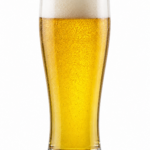
In the glass, Carlsberg Beer appears pale golden yellow, clear, and brilliant. The head is white, fine, and generally quite dense, although its length may vary depending on the size, temperature, and condition of the glass.
To obtain a good head, it's important to use a perfectly clean glass. Grease or detergent residue can quickly reduce its persistence. When pouring, it's best to tilt the glass, pour along the side, and gradually straighten it at the bottom.
Drinking straight from the bottle or can is convenient, but limits the perception of aromas. A glass, on the other hand, allows the beer to release its herbaceous notes and properly display its color and carbonation.
Perfume and aromatic characteristics
The aroma is delicate but recognizable. The malt brings hints of cereal, fresh bread, and a pale crust, while the hops add floral, herbaceous, and slightly resinous nuances. Slight hints of straw or fresh fruit may also appear, though this does not necessarily indicate the presence of these ingredients in the recipe.
The aroma is intentionally understated. Carlsberg Pilsner is designed to be clean and immediate, not to develop a particularly complex bouquet. If served too cold, even these subtle nuances can become difficult to discern.
Taste, body and finish
The entry on the palate is smooth, with a subtle sweetness of malt and grain. The lively carbonation lightens the sip, while the bitterness gradually emerges and accompanies the finish. The body is medium-light, more structured than the pale color might suggest, but still smooth.
The finish is dry, clean, and moderately bitter. The herbaceous hop notes linger for a moment, balanced by a return of bread and malt. It doesn't have the pronounced sweetness of a strong lager or the fermentation complexity of a top-fermented beer.
It's often described as thirst-quenching, but this definition only refers to the taste sensation. Being an alcoholic beverage, it's not a substitute for water for hydration, especially on hot days.
Temperature and serving glass
A temperature between approximately 40 and 43°F (4 and 6°C) enhances freshness without making the flavor completely neutral. Served at lower temperatures, the beer may seem smoother but less aromatic; if it gets too warm, the malty sweetness becomes more evident.
A tall Pilsner glass, a narrow pint glass, or a lightly weighted mug are suitable. The slender shape helps maintain carbonation and allows you to observe the clarity and development of the head.
Food pairings
Carlsberg Beer is delicate enough to pair with baked goods, focaccia, sandwiches, Margherita pizza, and vegetable dishes. Its carbonation and moderate bitterness also pair well with fried foods, chips, breaded chicken, and battered fish.
It offers a simple and clean contrast with grilled meats, burgers, and sausages. It can also be served with fresh or slightly aged cheeses, which won't overpower its character. Richly structured dishes, braised meats, and intensely aged cheeses, on the other hand, call for a more robust beer.
Food container
Carlsberg Pilsner should be stored away from light and heat, preferably upright. It is not intended for aging: it should be consumed within the date indicated on the package, when it retains its freshness, carbonation, and hop aroma.
In conclusion
Carlsberg Beer usually refers to Carlsberg Pilsner, a 5% ABV Danish lager in Italian. The brewery dates back to 1847, while modern Pilsner is based on the 1904 recipe. Served between 40 and 44°F (4 and 6°C), it offers a clean, moderately bitter taste, perfect with pizza, fried foods, grilled meats, and fresh cheeses.
The board

Brewer style

Alcoholic degrees

Service temperature

Recommended mug