DESCRIPTION
Hacker Pschorr Hefe Weisse is a top-fermented, unfiltered, and naturally cloudy Bavarian wheat beer. The current official German name is Hacker-Pschorr Hefe Weiße, but the given title clearly identifies the same reference. It has an alcohol content of 5,5% and a declared initial gravity of 12,5°Plato.
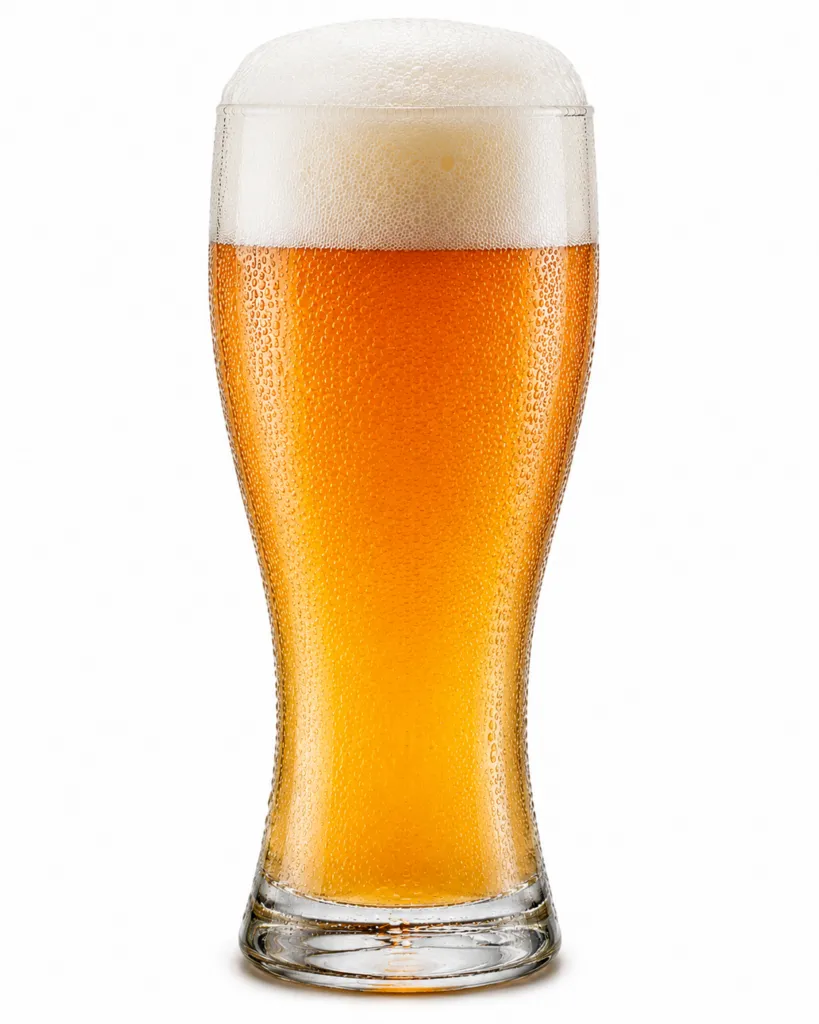
In the glass, it offers the typical profile of Bavarian hefeweizen: a deep golden color, a generous head, and fruity and spicy aromas, primarily from the yeast. The sweetness remains moderate, while the bitterness of the hops plays a secondary role. It's a smooth and lively beer, designed to be enjoyed young and served in the characteristic tall weissbier glass.
The meaning of Hefe Weisse
In German, "Hefe" means yeast, while "Weisse" or "Weiße" refers to the wheat beer family. The term therefore indicates an unfiltered weissbier, in which the yeast remains visible and contributes to the natural haze.
It shouldn't be confused with a Kristallweizen, which is filtered and appears clear, nor with a Belgian witbier, which typically has a different production tradition and is often flavored with coriander and orange zest. Bavarian hefeweizen relies much of its aromatic profile on the yeast strain and fermentation management.
The declared ingredients for Hacker-Pschorr Hefe Weiße are water, wheat malt, barley malt, yeast, and hops. Banana, honey, cloves, and citrus are primarily sensory descriptors and do not indicate that these ingredients were added to the recipe.
A beer tied to the history of Hacker-Pschorr
The origins of the Hacker-Pschorr brand date back to 1417, the year in which the first mention of the Hacker brewery in central Munich is dated. In 1793, Joseph Pschorr married Maria Theresia Hacker and took over the family business. The Hacker and Pschorr companies were later separated and reunited in the 20th century.
Hefe Weisse has a special connection with the Pschorr family. According to the brewery's own story, Georg Pschorr helped make this type of wheat beer known beyond Bavaria's borders.
The brand's long history, however, doesn't mean the current recipe has remained unchanged for centuries. Raw materials, equipment, control techniques, and packaging methods have evolved over time. It's therefore more accurate to consider the beer a modern expression of a long-standing Bavarian tradition.
Appearance and foam
In the glass, Hacker Pschorr Hefe Weisse displays a deep golden yellow color and a noticeable haze. The cloudiness is primarily due to suspended yeast and wheat proteins, not to storage defects.
The head is white, abundant, and creamy, with fine bubbles and good persistence. The wheat promotes the formation of a stable crown, but the result also depends on the glass: grease or detergent residue can quickly cause the head to disappear.
Carbonation is lively and requires a gradual pour. Pouring the beer too quickly can leave the glass almost entirely filled with foam, especially if the bottle has been shaken or stored at a high temperature.
Aromas of banana and spices
The aroma profile is dominated by notes produced during fermentation. The ripe banana comes primarily from the formation of esters, while the hint of clove is linked to the phenolic compounds developed by the yeast. The balance between these sensations can vary slightly from batch to batch and depending on the serving temperature.
Fresh bread, cereals, a light citrus note, and a floral or herbaceous hint from the hops complete the bouquet. The producer also notes a delicate sensation of honey, intended as an aroma and not an ingredient.
As the beer warms, the fruitiness becomes more evident. Too low a temperature, however, reduces the aromas and leaves only carbonation and freshness at the forefront.
Taste, body and finish
The palate is smooth, with a subtle malty sweetness and notes of wheat, bread, and banana. The body is medium and the texture is creamy, supported by the grain proteins and suspended yeast.
The carbonation adds liveliness and lightens the palate. Bitterness is low and doesn't have to compete with the fermentation aromas. The finish returns with grains, spices, and a light fruity acidity. Rather than being decidedly dry, the finish is clean, smooth, and moderately persistent.
The refreshing sensation is linked to flavor, carbonation, and temperature. Since it's a 5,5% alcohol beer, it doesn't replace water for hydration.
Temperature, glass and pouring
The recommended serving temperature is between 6 and 8°C. The ideal glass is a tall, slender Weizenglas, narrower at the base and wider at the top. This shape leaves room for the head and concentrates the aromas near the rim.
Before opening the bottle, it's helpful to hold it upright for a few minutes. Slowly pour almost all of the contents into the tilted glass; then, gently rotate the bottle to collect any yeast remaining on the bottom and add it to the beer. It's not necessary to shake it vigorously.
Those who prefer a cleaner taste can leave some of the sediment in the bottle, but the appearance will be less cloudy and the profile slightly less rich.
Food pairings
Hacker Pschorr Hefe Weisse pairs well with wheat sausage, pretzels, roast chicken, schnitzel, and other mildly spicy Bavarian specialties. The carbonation helps balance breading, creamy sauces, and moderately fatty meats.
It's also suitable for grilled fish, salads, vegetables, omelettes, quiches, and fresh cheeses. The banana and clove notes can complement spicy dishes in moderation, while very spicy or smoky dishes risk overpowering its flavor profile.
Food container
The bottle should be stored upright, away from light and temperature changes. Hefe Weisse is not intended for aging: over time, it loses its freshness, vivacity, and aromatic precision. It is best to consume it within the best before date indicated on the package and to chill it gradually before serving.
In conclusion
Hacker Pschorr Hefe Weisse is an unfiltered Bavarian hefeweizen with a 5,5% ABV, characterized by yeast, wheat, banana aromas, and spicy nuances. Served between 6 and 8°C in a tall weissbier glass, it pairs well with Bavarian cuisine, chicken, fish, vegetables, and fresh cheeses.
The board

Brewer style

Alcoholic degrees

Service temperature

Recommended mug