DESCRIPTION
Wayan is an Italian craft beer produced by Baladin and freely inspired by Belgian saisons. Created in 2000, it bears the name of Teo Musso's first daughter: in Balinese tradition, Wayan is a name associated with the firstborn. This family connection isn't just a curiosity, as the recipe has been modified over time to symbolically reflect the child's growth, taking on a progressively spicier character.
With an alcohol content of 5,8%, Wayan combines various grains, citrus fruits, aromatic herbs, and spices. The result is a complex yet approachable beer, where floral and peppery notes blend with a smooth, delicately malty base. It's not a rigid reproduction of Belgian rural saisons, but rather a personal interpretation, crafted in the Piedmontese brewery's creative style.
A Saison reinterpreted by Baladin
Saisons are top-fermented beers that historically originated in the agricultural areas of Wallonia. However, there is no single recipe that defines them: over time, they have been produced using different grains, spices, and raw materials, often available on individual farms.
Wayan retains some of the family's hallmarks, such as good effervescence, a spicy profile, and a dry finish. Compared to many traditional Belgian saisons, however, it appears softer and less rustic. Its character depends not only on fermentation, but also on the combination of grains, citrus peel, aromatic herbs, and spices.
Even the bitterness remains quite low. The hopping contributes to the overall balance without dominating the taste, leaving room primarily for citrus, floral, and herbaceous nuances.
A recipe built on cereals and spices
Wayan's composition is more complex than that of a standard lager. Baladin's recipe includes barley malt, spelt, malted and unmalted wheat, buckwheat, and rye. The use of different grains helps create a smooth and slightly silky consistency, without making the drink heavy.
To this base are added hops, citrus peel, aromatic herbs, and a blend of spices used in varying proportions. Different types of pepper are particularly important in the story of beer, their role having been strengthened as the recipe evolved. The specific composition can vary between versions and production periods: to determine the exact ingredients of the bottle you purchased, it's therefore advisable to check the label.
Sugar is also present, but this doesn't necessarily mean the beer has to be very sweet. During fermentation, simple sugars can be consumed by the yeast, contributing to a lighter body and a relatively dry finish.
Color, foam and aromatic profile
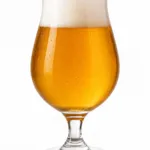
In the glass, Wayan displays a deep yellow color, almost golden, accompanied by a natural haze. The head is clear, fine, and quite persistent. To better observe the color and encourage the aromas to develop, it is recommended to use a tulip-shaped glass, which is fairly wide in the middle and slightly narrower towards the mouth.
The aroma is complex and gradually changes as the temperature rises. Citrus notes emerge initially, with hints of orange peel and lemon. Floral, herbaceous, and balsamic notes follow, reminiscent of thyme and rosemary. Pepper rounds out the bouquet with a fresh and pungent sensation, without becoming overpowering.
Alongside the more obvious aromas, nuances of bread, pear, yellow peach, and honey can be detected. These terms describe sensations perceived during tasting and do not automatically indicate the presence of the corresponding ingredients. Citrus fruits, spices, and aromatic herbs are indeed declared in the recipe, while other fruity notes arise from the interaction between grains, fermentation, and aromatic components.
The taste and the spicy finish
On the palate, Wayan opens with a moderate malty softness, immediately enlivened by carbonation. The body is medium-light, but the presence of wheat, spelt, and other grains gives it a creamier texture than a pale lager.
Notes of bread, citrus, and yellow fruit develop in the mid-palate, followed by a spicy finish. The pepper is distinct but well-integrated, accompanied by herbaceous nuances and a sensation reminiscent of ginger or aromatic roots. The finish is dry, clean, and persistent, with very limited bitterness.
Wayan's freshness is primarily about taste: the effervescence, citrus, and spices make for a lively sip, but an alcoholic beer is no substitute for water for hydration.
Temperature and serving tips
The recommended serving temperature is between 8 and 10°C. Serving it too cold will reduce the perception of the spices and floral notes; excessive temperatures, however, could bring out the sweetness of the malt.
The beer should be poured slowly down the side of the glass, straightening it at the end to form a uniform head. If there is a slight natural sediment in the bottle, you can choose to leave it on the bottom for a clearer appearance or gently swirl a small amount of it around the glass.
The most suitable combinations
Wayan is particularly interesting with fish, crustaceans, and mollusks. Its carbonation and dry finish pair well with oysters, shrimp, fish tartare, carpaccio, and white fish dishes. The citrus notes can also enhance dishes with aromatic herbs or lightly spiced dressings.
It also pairs well with white meats, spiced chicken, lean pork, and Asian or Middle Eastern-inspired recipes. With cheeses, it's best to choose medium-aged cow's milk products that are flavorful but not overly spicy.
To store it properly, it's best to keep the bottle away from light, in an upright position, and at a stable temperature. Wayan can develop different nuances over time, but the citrus and herbaceous aromas tend to be more pronounced when the beer is relatively young. The date indicated on the packaging remains the primary reference.
In conclusion
Wayan is an original Italian Saison, characterized by various grains, spices, citrus fruits, and aromatic herbs. Served at 8-10°C in a tulip glass, it best expresses its balance of smoothness, effervescence, and peppery finish. It's a versatile choice to pair with fish, shellfish, spicy meats, and medium-aged cheeses.
The board

Brewer style

Alcoholic degrees

Service temperature

Recommended mug