DESCRIPTION
Westmalle Tripel is a top-fermented Belgian Trappist beer that has played a key role in defining the modern tripel style. It is brewed at the Abbey of Our Lady of the Sacred Heart in Westmalle and bears the Authentic Trappist Product label. This certification certifies that production takes place within the abbey, under the supervision of the monastic community, and that proceeds support the monastery, the Trappist order, and charitable activities.
Calling it the "queen of tripels" is an informal way of underscoring its importance. The most common nickname among enthusiasts, also cited by the producer, is "the mother of all tripels," because the first version was brewed at the abbey in 1934. The current beer, with an ABV of 9,5%, has become a model for numerous Belgian and international interpretations.
A key beer for the tripel style
The birth of Westmalle Tripel is linked to the inauguration of a new production hall in 1934. The recipe was subsequently perfected and achieved its modern configuration in 1956. Since then, its balance of golden color, high alcohol content, fruity profile, spiciness and dry finish has profoundly influenced the contemporary idea of tripel.
The term "tripel" doesn't necessarily mean the use of three grains, nor does it necessarily mean the recipe contains three times the usual amount of malt. Today, it refers to a family of pale, strong Belgian beers, typically characterized by top-fermentation, lively carbonation, yeast-derived aromas, and a drier finish than the alcohol content might suggest.
Westmalle Tripel is brewed slowly, undergoes a second fermentation in the bottle, and is not pasteurized. Six European flowering hop varieties are used for hopping, giving it a nuanced aromatic profile and a clearly perceptible bitterness.
Appearance and foam
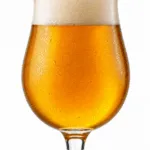
In the glass, Westmalle Tripel appears clear and golden yellow. It's not strictly amber, though the depth of color and lighting can create warmer highlights. The brilliance helps make it seem lighter than its alcohol content suggests.
The head is white, abundant, and persistent. Secondary fermentation in the bottle produces sustained natural carbonation, which favors the formation of a creamy head and can leave regular traces along the sides of the glass.
There may be a yeast sediment at the bottom of the bottle. The sediment is natural and does not indicate a defect, but spilling it affects clarity, aroma, and flavor. Those who prefer a cleaner tasting experience can leave a small amount in the bottle; those who want to know its effect can taste it separately.
Aroma: fruit, yeast and hops
The aromatic profile is dominated by ripe fruit and hops. The brewer particularly emphasizes a hint of ripe banana, accompanied by an elegant and complex hoppy component. Notes of pear, citrus, herbs, flowers, and spices may also emerge during tasting.
Hints of banana, honey, citrus, or spices are sensory descriptors and do not necessarily indicate the addition of these ingredients. Much of the fruity and spicy component comes from the yeast during top-fermentation and secondary fermentation in the bottle.
The aroma changes with temperature. When the beer is too cold, fruit and spices fade into the background; as it gradually warms in the glass, the bouquet becomes more expansive and allows the alcohol component to be more readily perceived.
Taste, body and finish
On the palate, Westmalle Tripel is smooth and creamy, yet not heavy. The 9,5% ABV gives it structure and warmth, while the lively carbonation lightens the body. The result is more dynamic than a predominantly sweet or malty beer.
Ripe fruit complements a delicately sweet base, immediately balanced by the bitterness of the hops. The brewer claims a level of 38 EBU, enough to give the beer a clean finish without making it aggressively bitter.
The finish is long and dry. This characteristic represents one of the most important aspects of Westmalle Tripel: despite the alcohol and initial softness, the sip doesn't end with a heavy sweetness. The warmth remains perceptible, but it should integrate with the fruit, yeast, and hops.
Temperature and serving glass
Westmalle Trappist beers express their character best in a temperature range of approximately 6 to 12°C. For Tripel, it's best to avoid the coldest part, letting it rest for a few minutes after removing it from the refrigerator. This allows the aromas to unfold without the alcohol dominating.
The traditional glass is a wide, stemmed goblet, capable of holding the head and concentrating the aroma. The bottle should be held steady before opening. When pouring, the glass is tilted, pouring slowly and straightening at the bottom. To keep the beer clear, simply stop pouring before the sediment reaches the glass.
Food pairings
Westmalle Tripel pairs well with creamy or savory cheeses, pâtés, terrines, roasted white meats, and game. The carbonation and dry finish help cleanse the palate, while the fruity notes pair well with herb-based, fruit-based, or lightly spiced sauces.
It's also interesting with asparagus, Belgian endive, mussels, firm fish, and creamy risottos. With spicy cuisine, it's best to keep the intensity moderate: alcohol can amplify the heat produced by the spices.
For dessert, lightly sweetened dishes are best, perhaps with yellow fruit, almonds, or leavened dough. Very rich desserts, on the other hand, can mask the hoppy finish and make the beer seem drier.
Conservation and evolution
The bottle should be stored upright, in the dark, and at a stable temperature. Secondary fermentation and the high alcohol content allow Tripel to evolve, but change doesn't always mean an improvement. Over time, the hop aroma and bitterness may fade, while smoothness and mature notes increase.
To experience the brewery's intended profile, it's best to consume it within the best-before date indicated on the packaging. An older bottle may offer a different experience, provided it's been stored properly and the cap and packaging are intact.
In conclusion
Westmalle Tripel is a 9,5% ABV golden Trappist, complex yet surprisingly dry. Served in a glass, not too chilled and carefully poured, it perfectly expresses ripe fruit, hops, lively carbonation, and a long, bitterish finish.
The board

Brewer style

Alcoholic degrees

Service temperature

Recommended mug