DESCRIPTION
Abbaye du Val-Dieu Brune is a Belgian abbey beer brewed on the Val-Dieu Abbey estate in Wallonia. Its profile combines malt, caramel, dark fruit, and spices, supported by a full body and a warm yet balanced alcohol presence.
The brown color with ruby highlights and creamy head suggest a beer suited to slow tasting. Despite its direct connection to a Cistercian monastery, Abbaye du Val-Dieu Brune is not a Trappist beer. The two definitions meet different criteria and should not be used interchangeably.
The link with the Abbey of Val-Dieu
Val-Dieu Abbey has a long monastic history. As in many European monasteries, the production of fermented beverages was part of the activities related to self-sufficiency and hospitality.
Modern beer draws on this legacy, but the term "ancient monastic recipe" should be interpreted with caution. Techniques, equipment, raw materials, and fermentation knowledge have changed profoundly over the centuries. It's therefore more accurate to speak of contemporary brewing inspired by the abbey's tradition.
A distinctive feature is the brewery's location within the abbey site. This strengthens the connection with the place, without automatically transforming the product into a Trappist beer, a designation reserved for beers that meet specific conditions.
A Belgian Dark Strong Abbey Ale
Abbaye du Val-Dieu Brune belongs to the family of dark, structured Belgian ales. The malt offers notes of bread, caramel, and dried fruit, while the yeast contributes fruity and spicy nuances.
The dark color doesn't necessarily come from deep roasting like a stout. In a brown abbey beer, cocoa and coffee often fade into the background, leaving more room for toffee, plums, raisins, and dark bread.
The finish should balance the initial sweetness with carbonation, attenuation, and a moderate bitterness. If these elements are well integrated, the rich body doesn't become heavy.
Appearance and foam
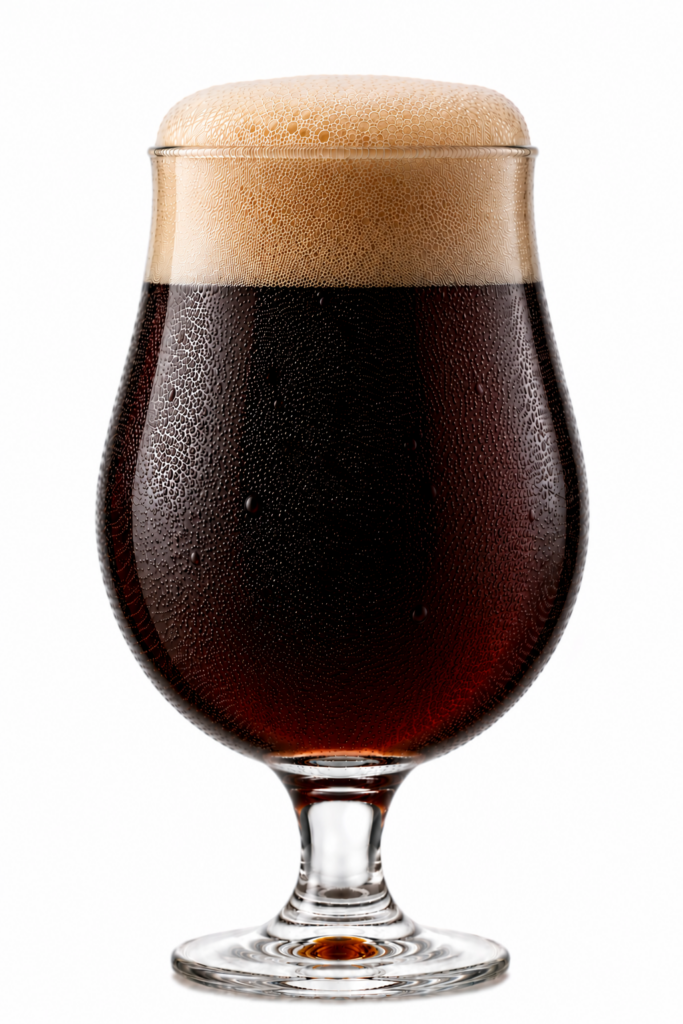
Poured into the glass, the beer displays a deep brown hue with ruby, mahogany, and dark copper highlights. The light especially highlights the red hues along the rim.
The foam takes on a color ranging from beige to light cappuccino. It can form a creamy layer and stick to the sides of the glass during sipping.
To achieve a consistent pour, the glass should be tilted and the beer poured initially along the side. At the end, the glass is straightened, allowing a balanced head to form.
The glass must be perfectly clean. Grease or detergent residues reduce the stability of the foam and can alter a complex and delicate bouquet.
The aromatic profile
On the nose, malt, caramel, and dark bread emerge, accompanied by ripe or dried fruit. Plum, raisin, fig, and cherry are common descriptors describing the fruitiness.
Chocolate and cocoa notes generally come from malts and don't necessarily indicate the direct addition of these elements. The same goes for toffee and caramel, which are used as aromatic references.
Yeast can develop nuances of pepper, cloves, vanilla, or spirit-preserved fruit. Alcohol adds depth and becomes more pronounced as the temperature rises.
When served too cold, Abbaye du Val-Dieu Brune appears more closed and less fruity. After a few minutes in the glass, the plum, toffee, and spices emerge more.
The taste of Abbaye du Val-Dieu Brune
The entry is smooth, with a full malty sweetness. Caramel, bread, and dark fruit build a rich base, supported by a substantial body.
Toffee, plum, dried fruit, and a light toastiness develop in the middle. The bitterness remains subtle and serves primarily to balance the palate.
Carbonation lightens the structure and cleanses the palate. Without sufficient liveliness, such a malty beer might seem overly sweet.
The finish is long and warm, with hints of caramel, ripe fruit, and spice. The alcohol should be well-integrated, not burning. Too high a temperature can make it more noticeable and reduce the harmony.
Any deposit in the bottle
A natural sediment may be present in a refermented or unfiltered beer. Its presence does not automatically constitute a defect and can affect clarity, flavor, and consistency.
For a clearer beer, hold the bottle upright and pour slowly, leaving the bottom separated. Those who prefer a higher yeast content can add a small amount, following the instructions on the package.
Yeast can enhance bready and spicy notes, but it also makes the beer hazier. Shaking the bottle vigorously is not recommended, as it can cause a lot of foam to escape.
Temperature and glass
A serving temperature of around 9-11°C allows you to appreciate the malt, fruit, and spices without overemphasizing the sweetness. Serving the beer almost chilled hides much of the bouquet.
An abbey beer glass or a tulip glass are particularly suitable. Both capture the aromas, support the head, and allow the glass to be held by the stem.
The serving size should be moderate. A modest amount allows the beer to develop without overheating before being finished.
The glass should not be frozen. Ice and condensation can dilute the beer and compromise the foam and aroma.
Food pairings at the table
Abbaye du Val-Dieu Brune pairs well with braised meats, stews, game, and roasted meats. The malty sweetness evokes long cooking, while carbonation and alcohol support rich sauces.
Aged, blue-veined, or washed-rind cheeses work well with this pairing. A cheese that's too delicate risks being overpowered by the body of the beer.
It's also suitable for mushrooms, terrines, pâtés, and dishes featuring prunes or dried fruit. Very spicy dishes are less suitable, as alcohol can increase the sensation of heat.
Desserts include not-overly-sweet recipes based on dark chocolate, caramel, plums, or figs. It can also be served on its own as a sipping beer.
Conservation and evolution
The bottle should be stored upright, away from light and temperature fluctuations. A cool, stable environment helps maintain carbonation and aromas.
The structure allows for some evolution. Over time, the fresh yeast notes tend to diminish, while fruit in alcohol, caramel, and oxidative nuances may emerge.
Aging doesn't automatically improve every bottle. It's important to check the shelf life and follow the manufacturer's instructions.
Once opened, the beer should be poured and consumed immediately. Softness can make the alcohol content less evident, so it should be enjoyed responsibly.
A rich and harmonious abbey brunette
Abbaye du Val-Dieu Brune combines malt, caramel, plum, and spice in a full-bodied structure, lightened by carbonation and a balanced finish. Its connection to the abbey defines its identity, but does not make it a Trappist beer. Served at the right temperature and in an appropriate glass, it offers an intense experience, suitable for structured dishes and slow tastings.
The board

Brewer style

Alcoholic degrees

Service temperature

Recommended mug