DESCRIPTION
Leffe Brune is a Belgian abbey beer with a smooth, roasted, and slightly sweet profile. Its deep brown color, pale, creamy head, and caramel notes make it immediately recognizable within the Leffe range. The stated alcohol content is 6,5%: strong enough to give structure to the drink, but lower than that of more powerful Belgian beers intended primarily for slow sipping.
The initial description evokes coffee and dried fruit. These sensations may indeed be present in the glass, but the official profile primarily highlights roasted and fruity aromas, a caramelized flavor, and a subtle bitterness. It's therefore more accurate to consider coffee, cocoa, or hazelnut as possible sensory interpretations, not as mandatory characteristics or ingredients necessarily present in the recipe.
An abbey beer, not a Trappist one
The Leffe brand maintains a historic connection with the Abbey of Notre-Dame de Leffe, near Dinant. Beer production associated with the abbey dates back to the Middle Ages, while the modern range was relaunched in 1952 thanks to the collaboration between Abbot Nys and brewer Albert Lootvoet. Today, Leffe beers are commercially produced by AB InBev.
Leffe Brune therefore belongs to the category of abbey beers, but it is not a Trappist beer. The distinction is important: the term "Trappist" is reserved for products made according to precise requirements and under the supervision of a Trappist monastic community. In the case of Leffe, the abbey designation expresses a historical and commercial relationship with the religious institution.
Brune occupies a central place in the brand's modern history, being the first beer relaunched after the war. Over the years, the recipe, formats, and presentation may have been adapted to different markets, but the beer's identity has remained tied to a malty, creamy, and delicately roasted flavor.
Color and foam formation
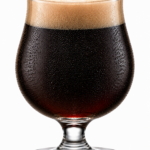
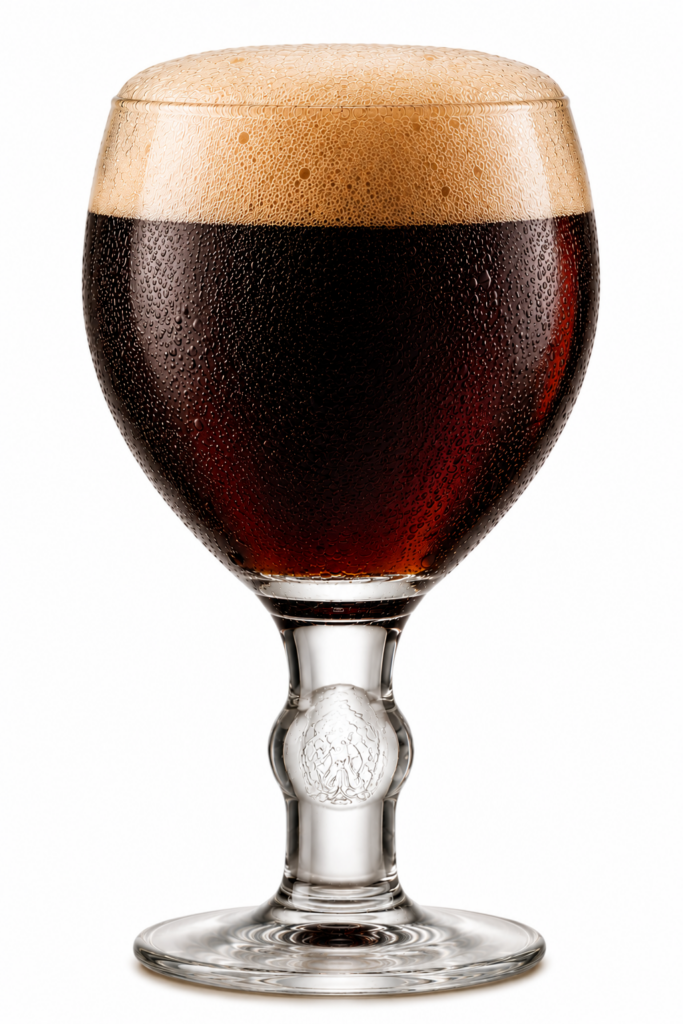
In the glass, Leffe Brune appears brown, with possible copper or ruby highlights visible against the light. It's not necessarily black or impenetrable like a stout: the hue comes from the use of dark roasted malt, which is also responsible for part of the aromatic sensations and the slight sweetness perceived during the sip.
The head tends towards ivory or light beige. It can be fine and creamy, with persistence influenced by temperature, the cleanliness of the glass, and the pouring method. A glass with grease or detergent residue can quickly compromise the head's retention, even when the beer is stored properly.
The aromatic profile
The aroma is dominated by malt, with hints of toasted bread, caramel, and lightly roasted cereals. The fruity component can be reminiscent of ripe or dried fruit, while the darker nuances evoke hazelnut, cocoa, and light coffee. However, this isn't a beer built on extreme roasting: the character remains smooth and accessible.
It's essential to distinguish sensory descriptors from ingredients. Perceiving the aroma of coffee, chocolate, or dried fruit doesn't mean these foods have been added. Roasting the malt and the compounds developed during production and fermentation can generate similar aromas without requiring the use of the recalled ingredients.
By letting the beer rest for a few minutes in the glass, the caramelized and fruity notes generally become more evident. Too low a temperature, however, tends to dull the aromas and bring out only the freshness of the carbonation.
Taste, body and finish
On the palate, Leffe Brune is smooth and creamy, with a distinct malty sweetness that's not overly heavy. Caramel accompanies the mid-palate, while light roasting adds depth. Its body is medium: more structured than a pale lager, but less dense than many craft dubbels or high-alcohol Belgian beers.
The bitterness remains subdued and appears especially in the finish, where it helps balance the sweetness. The carbonation lightens the texture and promotes a relatively clean finish. The result is a well-rounded and immediate beer, suitable for both sipping and accompanying a meal.
The sensation of alcohol warmth should be moderate. However, when the beer is served too warm, the sweetness and alcohol can become more noticeable, reducing the overall balance.
Temperature, glass and pouring
The recommended serving temperature is around 5°C. After pouring, the beer can slowly warm in the glass, allowing the toasted and fruity notes to unfold without losing freshness. It doesn't need to be brought to red wine temperature.
The Leffe glass, or an abbey beer glass with a rounded bowl, enhances the head and concentrates the aromas. The bottle should be opened without shaking. To pour, tilt the glass at about 45 degrees and gradually straighten it during the second half of the pour, allowing a regular layer of head to form.
Food pairings
The caramelized flavor pairs well with savory but not overly spicy dishes. Leffe Brune pairs well with Flemish carbonnade, braised beef, rabbit, roast chicken, and red meats. It also pairs well with lentils, legumes, roasted vegetables, and mushroom-based dishes.
Recommended cheeses include abbey cheeses, semi-mature cheeses, and soft, full-flavored cheeses. Pairing with hummus creates an interesting contrast between the creaminess of the dish and the toasted notes of the beer. At the end of the meal, try lightly sweetened desserts like caramel, dried fruit, or milk chocolate, avoiding overly sweet desserts that would undermine the balance.
Conservation and conclusion
Leffe Brune should be stored in a cool, dry place, protected from light, keeping the packaging away from heat and sudden changes in temperature. It is best to consume it within the period indicated by the manufacturer, as prolonged home aging does not guarantee improvement.
In short, Leffe Brune is a dark but not extreme abbey beer, characterized by roasted malt, caramel, smoothness, and a subtle bitterness. Served around 5°C in a suitable glass, it pairs well with meats, legumes, roasted vegetables, and cheeses, offering a full yet balanced experience.
The board

Brewer style

Alcoholic degrees

Service temperature

Recommended mug