DESCRIPTION
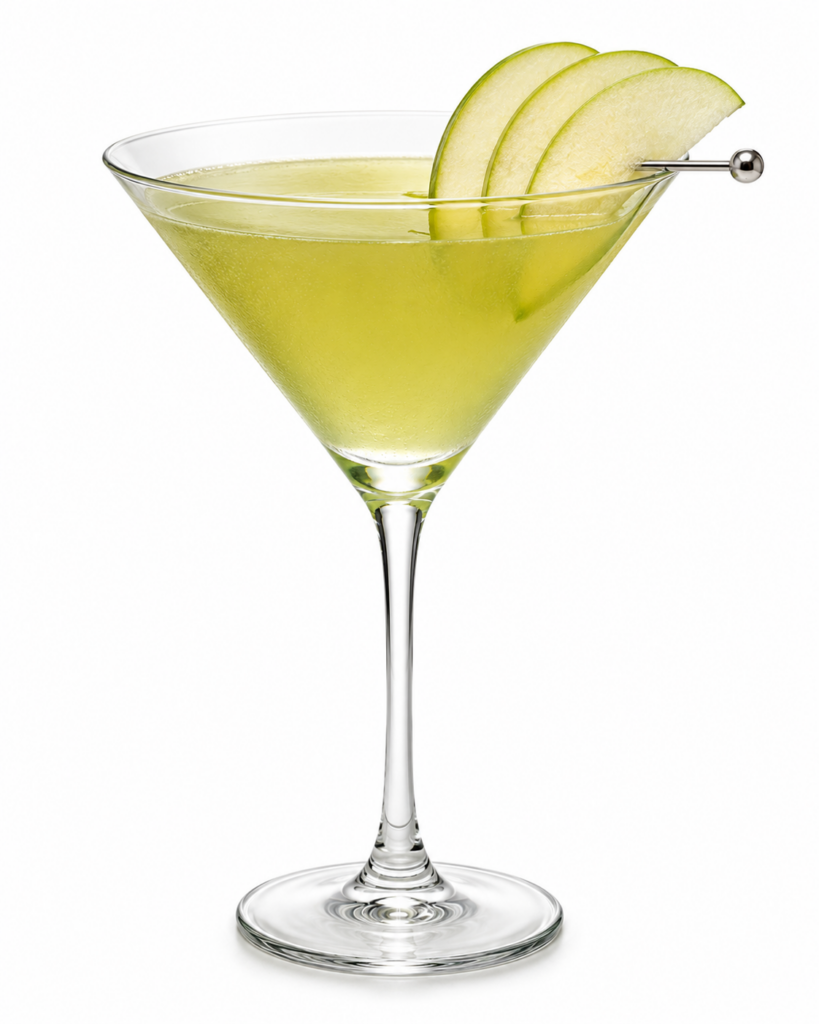
The Apple Martini, often called an Appletini, is a modern cocktail made with vodka and apple. Its profile can range from sweet and intense to fresh and slightly tart, depending on the type of liqueur, juice, or syrup used. The green apple version is particularly recognizable for its bright color and lively flavor.
Despite its name, it doesn't follow the traditional Martini formula, made with gin and vermouth. The term refers primarily to the glass and its presentation. The Apple Martini is, in fact, a fruity cocktail, generally shaken and served very cold in a glass.
A cocktail that became popular in the 1990s
The Apple Martini became popular in the United States during the 1990s, a period characterized by the rise of colorful cocktails, flavored vodkas, and intensely flavored liqueurs. Its modern image and green hue made it quickly recognizable.
Over time, numerous interpretations have emerged. Some use a sweet and tart green apple liqueur; others prefer apple juice, non-alcoholic cider, or artisanal syrups. There are also drier versions, in which the vodka takes center stage, and dessert-like variations, enriched with caramel or spices.
This flexibility allows for the cocktail to be adapted, but it's important to master the balance. A well-made Apple Martini should clearly recall the apple without having an artificial or overly sugary taste.
The choice of vodka
Vodka forms the alcoholic base and gives structure to the cocktail. A clean, neutral flavor leaves room for the fruity component and reduces the risk of a harsh finish.
An apple-flavored vodka can enhance the profile, but it must be carefully paired with liqueurs and syrups. Using multiple flavors at once can make the flavor unnatural and completely obscure the spirit.
The bottle can be chilled before preparation. A chilled vodka helps quickly reach the ideal temperature and limits the ice melting. Dilution is still necessary: a cocktail shaken too briefly can be pungent, even if served in a chilled glass.
Apple liqueur, juice or puree
Green apple liqueur produces the color and flavor most commonly associated with Appletini. It's generally sweet, with a pronounced tartness. Its intensity varies from brand to brand, so it should be tasted before adding syrups.
Apple juice offers a more natural and delicate profile. Clear juice keeps the cocktail clear, while cloudy juice or a puree creates a fuller consistency. Green and tart apple varieties are particularly suitable when a fresh result is desired.
The puree adds body and an intense aroma, but requires double filtration. If used in excess, it turns the cocktail into a thick drink and can produce a large head.
It is possible to combine a small amount of liqueur with fresh juice, achieving color and depth without relying solely on concentrated flavors.
Balance sweetness and acidity
Green apple is often associated with a tart taste, but many liqueurs and syrups are very sweet. The cocktail should therefore be tasted with all its components in mind.
Lemon or lime juice helps liven up the sip. It should be freshly squeezed and added gradually, as too much can overpower the apple flavors.
If the drink is too tart, a small amount of simple syrup can mellow it out. If it's too sweet, you should carefully increase the acidity or use a less sugary apple juice.
A tiny pinch of salt can brighten the flavor of the fruit and tone down a cloying sensation, but it shouldn't be directly perceptible.
How to Make an Apple Martini
The Apple Martini is prepared in a shaker. Vodka, apple component, and optional citrus juice are combined with solid ice cubes and shaken vigorously.
Shaking cools the cocktail, blends ingredients of different densities, and introduces a controlled dilution. The container should become very cold on the outside, without unnecessarily prolonging contact with the ice.
The mixture is strained into a pre-chilled glass. When using purees, cloudy juices, or crushed fruit, double straining eliminates residue and ice fragments, creating a more uniform consistency.
The cocktail is served without ice cubes in the glass and should be brought to the table immediately. As the minutes pass, it cools and the sweetness becomes more evident.
Color and presentation
The hue of an Apple Martini depends on the ingredients used. A green liqueur produces a vibrant color, while natural juice creates lighter, yellow, or slightly opaque hues.
Adding too much liqueur just to intensify the green color risks compromising the flavor. The color should be a consequence of the recipe, not the sole purpose of the preparation.
A thin slice of apple is the most immediate garnish. It can be placed on the edge or left floating on the surface. A lemon zest also adds flavor and keeps the dish fresh longer.
The glass should be simple and very chilled. A sugar-coated rim is suitable for sweeter versions, but it further enhances the sweetness with every sip.
Prevent the apple from darkening
Apple pulp oxidizes quickly after cutting and turns brown. Garnish should be prepared close to serving time.
Lightly basting the slice with lemon juice slows the browning process. However, don't leave it soaked for too long, otherwise the flavor becomes too acidic and the texture loses its crispiness.
If you're preparing a large number of glasses, the slices can be cut a little ahead of time and kept refrigerated in slightly acidulated water. Before use, they should be carefully dried to prevent water droplets from diluting the surface of the cocktail.
Variations of the Apple Martini
Cinnamon and ginger create a spicy version perfect for the colder months. A small amount of caramel recalls caramel apple, but makes the cocktail sweeter and more dessert-like.
Cider can add a more complex profile. If it's alcoholic, it increases the proof; if it's sparkling, it should be poured into the glass after shaking, not added to the shaker.
A herbaceous component, such as basil or rosemary, can make the drink drier and more aromatic. Herbs should be handled gently to avoid bitter notes.
Advance preparation and consumption
The vodka and apple base can be prepared ahead of time and stored in the refrigerator in a sealed container. Fresh lemon juice should be added close to serving time.
Each serving should be shaken with ice and strained into a glass. Preparing the full cocktail too early will result in a loss of temperature and freshness.
The sweet, fruity flavor may make the alcohol less noticeable, but the Apple Martini remains a concentrated cocktail. It should be served in a measured portion and consumed responsibly.
A modern apple cocktail
The Apple Martini is best when the vodka remains distinct and the apple provides a fresh, not overly artificial, flavor. Proper acidity, compact ice, and a chilled glass help keep the drink balanced. Served immediately with a thin slice of apple, it's a modern, colorful, and easily customizable cocktail.
The board

Ingredients
- 5 cl Vodka
- 2 cl Green Apple Liqueur (Apple Schnapps)
- 1 cl triple sec
- 1 cl Fresh lemon juice
- qb Ice
- Slice of green apple for decoration

Preparation
- Fill a shaker with ice
- Pour in the vodka, green apple liqueur, triple sec and lemon juice
- Shake vigorously until the mixture is well chilled.
- Strain into a previously chilled cocktail glass
- Garnish with a thin slice of green apple

Alcoholic degrees

Recommended glass