DESCRIPTION
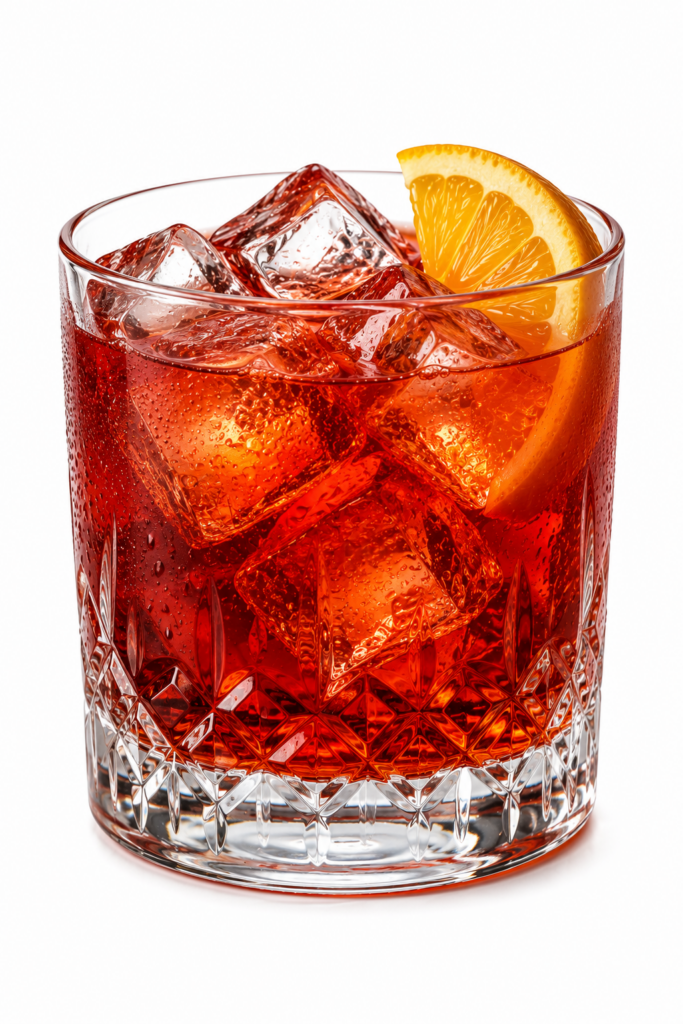
The Americano is one of the most iconic Italian aperitif cocktails. Its structure is based on the combination of a citrusy and bitter bitter, sweet red vermouth, and a touch of soda water. The result is a ruby-colored, aromatic, and slightly sparkling drink, perfectly balancing bitterness, sweetness, and freshness.
Compared to many classic cocktails, it has a lower alcohol content thanks to the presence of soda and the absence of spirits. It is still an alcoholic beverage and should be consumed in moderation. Served very cold and accompanied by a simple citrus garnish, it is suitable as an aperitif, but can also be enjoyed as a light pre-dinner drink.
The Origins of the American
The history of the Americano is tied to that of the Milano-Torino, a cocktail made with Milanese bitters and Turin vermouth. The addition of soda water transformed this combination into a lighter, more thirst-quenching drink, contributing to the creation of the version we know today.
The precise origin of the name is not definitively documented. One of the most popular explanations links it to the cocktail's popularity among American visitors to Italy. Other reconstructions suggest a more gradual evolution of the name and recipe.
Regardless of the various historical interpretations, the Americano has established itself as an essential classic of Italian cocktail making. The simplicity of its formula, however, doesn't mean it can be prepared without care: the quality of the vermouth, the temperature, and the amount of soda water all significantly impact the result.
The balance between bitters and vermouth
Bitter gives the Americano its red color and distinctive bitterness, enriched with notes of herbs, spices, and citrus zest. Red vermouth adds sweetness, body, and vinous, herbaceous, and spicy aromas.
The two components are generally used in balanced proportions. This approach allows the bitters to maintain their character without making the drink too aggressive, while the vermouth softens the bitterness.
The flavor can still be adjusted. Those who prefer a drier Americano can slightly reduce the vermouth or increase the soda water. A larger amount of vermouth, however, produces a rounder, sweeter drink. Variations should be kept to a minimum, otherwise the cocktail's identity may be lost.
The importance of vermouth
Vermouth is an aromatized wine and, once opened, should not be treated like a spirit. Contact with oxygen gradually alters its aromas and can make the taste less fresh.
After opening, the bottle should be carefully closed and stored in the refrigerator. It's best to consume it within a reasonable period of time, especially when used in simple cocktails like the Americano, where its flavor remains clearly noticeable.
Before preparing the cocktail, it's helpful to taste a small amount. An oxidized vermouth, left open for too long at room temperature, can make the cocktail flat or alter its balance. The bitters and soda water should also be of good quality, but it's often the vermouth that makes the most noticeable difference.
How to prepare Americano
The Americano is prepared directly in the glass, without using a shaker. A low tumbler is filled with large, compact ice cubes. Then, the bitters and vermouth are poured in, stirring briefly to chill them and begin the proper dilution.
The soda water is added slowly at the end to preserve its effervescence. A gentle stirring with a spoon is enough to distribute it evenly. Stirring too long would make the cocktail less fizzy and would cause the ice to melt.
Some presentations use a tall glass, especially when you want to add more soda water and create an even lighter drink. The version in a short glass, however, maintains a more concentrated flavor and is closer to the classic aperitif style.
The amount of soda
The soda water doesn't just add volume to the cocktail. It reduces the alcohol concentration in the glass, tones down the sweetness of the vermouth, and softens the bitterness. It must be very cold, as room-temperature soda would quickly melt the ice.
A small addition keeps the drink intense and aromatic. A larger amount creates a longer, more thirst-quenching Americano. It's best to pour gradually, tasting as needed, rather than immediately diluting the mixture excessively.
The bottle or siphon should be opened just before serving. A nearly carbonated soda water makes the cocktail flat and lacks the vibrant contrast that characterizes the Americano.
Ice and temperature
Ice is essential to the structure of a drink. Large, solid cubes melt more slowly and allow you to keep the temperature low without adding too much water. Small, wet, or partially melted ice, on the other hand, dilutes the cocktail more quickly.
The glass can also be chilled before preparation. This isn't mandatory, but it's a useful tip, especially in summer. Chilled bitters and vermouth further reduce the time needed to bring the cocktail to the ideal temperature.
An Americano should be served immediately. Letting it sit in the glass for too long causes it to lose its effervescence and gradually dilute.
The most suitable gasket
An orange slice or peel is the most common garnish. The peel's oils echo the bitters' citrus notes and add aroma without significantly altering the flavor.
A lemon zest can also be used for a fresher, more distinct flavor. Some recipes use both citrus fruits, but a simple garnish is usually sufficient.
The peel can be gently folded over the glass to release its aromatic oils, then placed on the rim or inserted into the cocktail. If using a whole slice, it's important to wash the fruit thoroughly before cutting.
Americano and Negroni
The Americano and Negroni share bitters and red vermouth, but have different structures. In the Americano, the third ingredient is soda water, which makes the cocktail lighter and more fizzy. The Negroni uses gin, resulting in a higher alcohol content and more intense aroma.
So these aren't just two variations of the same drink. The Americano is longer, more delicate, and thirst-quenching, while the Negroni has a more concentrated and decisive sip. This difference makes the Americano particularly suitable for the beginning of an aperitif or for those who prefer a less alcoholic drink.
The essence of the Italian aperitif
A good Americano is born from the balance between the bitterness of the bitters, the aromatic sweetness of the vermouth, and the liveliness of the soda water. Well-preserved vermouth, cold ingredients, and compact ice enhance a seemingly simple recipe. Prepared directly in the glass and topped with an orange peel, it remains an elegant, refreshing cocktail deeply rooted in the tradition of the Italian aperitivo.
0:49
The board

Ingredients
- 3 cl Campari Bitters
- 3 cl Sweet red vermouth
- qb Soda
- qb Ice
- Half an orange slice and lemon zest for decoration

Preparation
- Fill an old fashioned glass with ice
- Pour the Bitter Campari and the red vermouth
- Add soda until full
- Mix gently with a bar spoon
- Garnish with half an orange slice and a lemon twist.

Alcoholic degrees

Recommended glass