DESCRIPTION
The Vesper Martini is a dry and powerful cocktail made famous by James Bond in Ian Fleming's 1953 novel "Casino Royale." Its structure combines gin and vodka with a small amount of flavored wine, creating a clear, very cold drink with a high alcohol content.
Unlike the classic Martini, it doesn't use only gin and dry vermouth. The original formula included Kina Lillet, an aromatized wine-based aperitif that is no longer produced in its original form. Modern interpretations must therefore resort to substitutes capable of at least partially reproducing the contrast between citrus notes, moderate sweetness, and a slight bitterness.
The origins in “Casino Royale”
The Vesper appears in the first James Bond novel. The secret agent himself describes its preparation, calling for a precise combination of gin, vodka, and Kina Lillet, shaken with ice and finished with a thin lemon twist.
The name was chosen in reference to Vesper Lynd, one of the story's central characters. The connection to the novel made the cocktail a symbol of the Bond imagination, long before it became popular in bars around the world.
The recipe also stands out for its proportions: gin and vodka are present in significant quantities, while the flavored wine plays a more moderate role. The result is stronger and drier than many cocktails served in the same glass.
Kina Lillet and modern substitutions
Kina Lillet was a French aperitif made with aromatized wine, also characterized by the presence of quinine. It wasn't strictly a vermouth, although it belonged to the larger family of aromatized wines used in blends.
Its production in its original form has ceased, and the current Lillet Blanc generally has a smoother and less bitter profile. Using it in Vesper produces an elegant and citrusy cocktail, but less similar to the bitterness that would have characterized the original recipe.
Some bartenders prefer a wine-based aperitif with a more bitter, quinine-rich flavor. Others use Lillet Blanc, complemented with a minimal amount of bitters. No substitution can completely recreate the original product, but it's possible to find a balance between sweetness, citrus, and bitterness.
Once opened, aromatized wine should be resealed and stored in the refrigerator. Like vermouth, it is susceptible to oxidation and gradually loses its freshness.
The role of gin
Gin is the main ingredient in the Vesper Martini. A London Dry with a distinctive juniper flavor recalls the style of the historic recipe and gives the cocktail a dry, botanical, and bold profile.
Highly floral, fruity, or spicy gins can be used, but they alter the drink's identity. Because the quantity is significant, every characteristic of the spirit remains evident even after the addition of vodka and flavored wine.
The choice must also consider the alcohol content. A high-proof gin creates a particularly intense Vesper and requires proper dilution with ice. Reducing the mixing time to maintain strength risks producing a pungent and inharmonious cocktail.
The contribution of vodka
Vodka doesn't just raise the alcohol content. It helps smooth out the structure and imparts a clean sensation, leaving room for the gin and lemon notes.
A neutral vodka is the most common choice. Richer, smoother products can add more roundness, but they shouldn't have such overt aromas that they compete with the juniper.
Gin and vodka can be chilled before use. This allows them to quickly reach a very low temperature, although some of the dilution provided by the ice is still necessary to balance the cocktail.
Shaken or stirred
Vesper is traditionally shaken in a shaker, following the instructions associated with the James Bond character. Shaking brings the drink to a very low temperature, introduces water, and can temporarily make it less clear due to tiny air bubbles and ice fragments.
After letting it sit in the glass for a few moments, the cocktail tends to regain clarity. Double straining helps eliminate smaller particles and provides a clean consistency.
Some bartenders prefer to stir it to preserve perfect clarity and a silkier texture. This is a technically valid interpretation, but less consistent with the preparation described in the novel.
In both cases, dilution is crucial. A Vesper mixed too lightly can be aggressive; mixing it too much with wet ice makes it weak and lack definition.
Temperature and glass
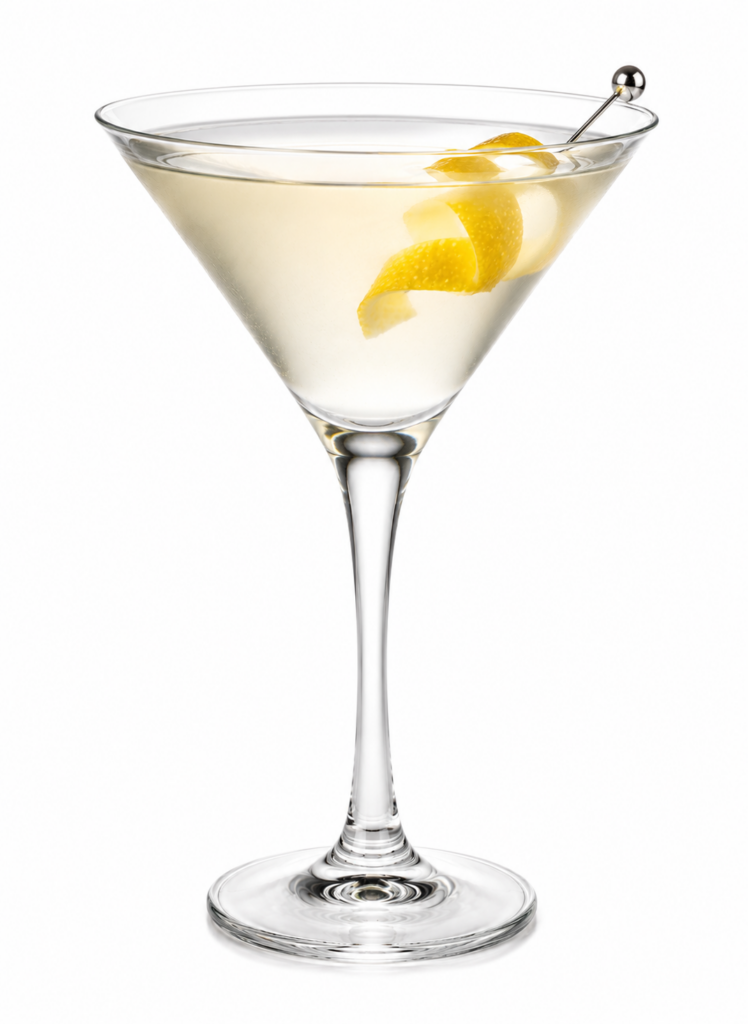
The cocktail is served without ice in a chilled glass. The glass must be chilled beforehand, as it doesn't contain ice cubes to maintain the temperature after serving.
The ice used in the shaker must be solid, compact, and odorless. Partially melted cubes will add water too quickly and make it difficult to control the result.
Vesper should be served immediately. Left at room temperature, it quickly loses the crisp, icy sensation that characterizes the first sip. A moderately sized glass helps prevent the drink from warming before you finish it.
Lemon zest
A thin strip of lemon zest is the signature garnish. It should include mostly the yellow part, rich in aromatic oils, and limit the white part, which can be bitter.
The peel is gently folded over the surface of the cocktail to release the essential oils. It can then be wiped over the rim and inserted into the glass or removed, depending on the desired aroma.
Lemon adds freshness without introducing the acidity that would come from the juice. An olive garnish, typical of other Martini variations, is less appropriate because it would lead to a savory profile that's far from the Vesper formula.
Advance preparation
Gin, vodka, and flavored wine can be measured out a short time in advance and stored in the refrigerator in a closed container. Each serving should then be shaken or stirred with ice before straining into the glass.
Preparing the full cocktail too early is not advisable. The temperature rises, the aromas fade, and the dilution can no longer be adjusted. The lemon zest should also be cut close to serving time to preserve its aromatic oils.
Vesper contains a significant amount of distilled spirits and only a small amount of non-alcoholic spirits. Its cold, clean taste can make its strength less obvious, so it's best served in a measured portion and consumed responsibly.
A powerful and recognizable Martini
The Vesper Martini strikes a balance between the botanical character of the gin, the structure of the vodka, and the citrus and bitter notes of the aromatized wine. Substituting the Kina Lillet requires care, as does dilution during shaking. Served very cold and garnished with a lemon twist, it remains an intense, elegant cocktail inextricably linked to the James Bond universe.
The board

Ingredients
- 6 cl Gin
- 1,5 cl Vodka
- 0,75 cl Dry vermouth (Kina Lillet or similar)
- qb Ice
- Lemon zest for decoration

Preparation
- Fill a shaker with ice
- Pour in the gin, vodka and dry vermouth
- Shake vigorously until the mixture is well chilled.
- Strain into a chilled cocktail glass
- Garnish with a lemon twist

Alcoholic degrees

Recommended glass